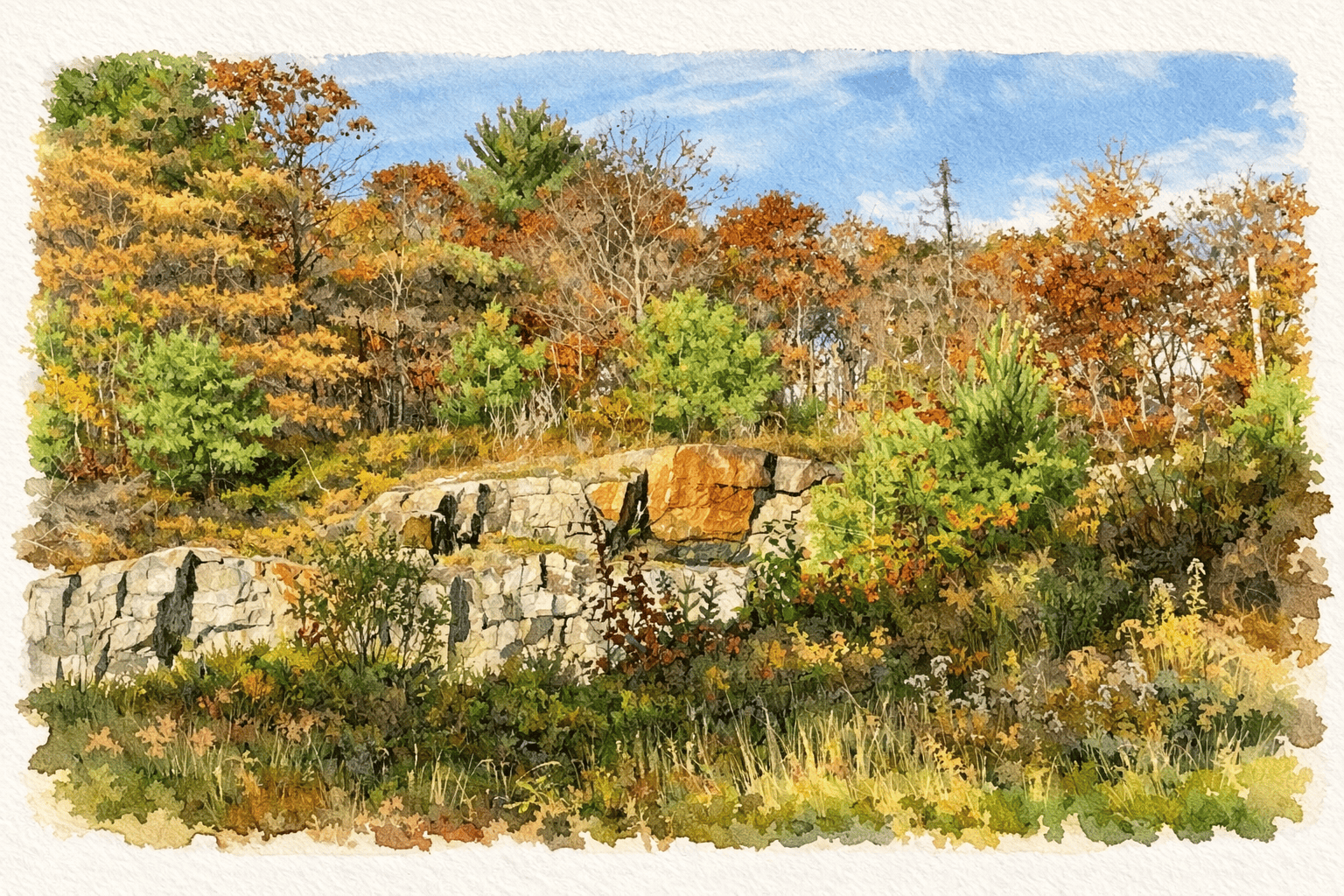
We’ve both spent our lives around forests, camping and watching trees grow, but we’d never really taken the time to learn their deeper history. We knew the basics, a few tree types at a high level, but nothing specific. We couldn’t identify the different parts of the forest or read the story it was telling.
At the same time, we’d just bought the property. Property taxes on vacant land were one more cost we weren’t looking forward to. That’s when we found Ontario’s Managed Forest Tax Incentive Plan (MFTIP).
What is MFTIP?
MFTIP is a provincial program that gives you a 75% reduction in property taxes in exchange for working with a local forester and following a managed forest plan. There’s an upfront cost to set it up, but the tax savings add up over the years. You also get something else: a forester who walks your land, explains what’s there, and helps you plan how to care for it.
Walking the property with Alex
We partnered with Alex Marcantonio, a local forester. He showed up in his Ford Ranger with a high-energy dog that zipped through the woods while Alex, my brother, and I walked the property line. Alex wasn’t there only to tick boxes for a tax plan. He was there as someone with a deep, genuine interest in Ontario’s forests, and it turned out he’d already done work in our local area.
He told us the history: the forest had burned about 100 years ago, likely from a lightning strike or logging equipment. He pointed out the white birch, the first sign of a young forest. Those trees last 60 to 80 years, maybe a bit longer, before they rot. Then they become habitat for woodpeckers, food for insects, and fuel for the next generation of trees. He showed us clusters of ironwood and suggested we thin them; ironwood makes good firewood, and we didn’t need 10 stems crowded together. He explained which trees were dying and why we should take them down before they became a hazard or damaged others. He pointed out lichens and mosses and taught us the plants and trees on our property.
He helped us find the edge of the property and the old demarcations, and how lot lines were figured out in the past. He showed us the century-old lot line and talked about the history of logging. He spoke about the Indigenous communities he works with and the treaty land on the crown land beside us, land that would be returned to them in the coming years. Then he brought it all back to the tax incentive and what it means to maintain a forest over the long term. It was a striking mix: bureaucracy and paperwork on one side, and the raw, living forest on the other.
Since then
We’ve committed to the plan. We’ve built trails across the property and taken firewood from the thinned ironwoods and the dead trees we’ve dropped. We’ve expanded the area we use as we prepare to build, and we’ll be reaching out to Alex again soon to update the plan for the part of the property that will be lived on.
We’ve also started to see the land differently, as a place that’s home to ducks and geese, woodpeckers and owls, foxes and black bears, and all the plants and animals that belong there. The forester visit didn’t just cut our taxes. It gave us a way to learn the forest and a reason to take care of it.