During the first year on the property, we were out there as often as we could get away, including through the winter. To make cold-weather stays work, we picked up insulated ice-fishing shelters to use as tents and ran a generator overnight to power heaters. For a while, the setup did the job.
We’d taken what felt like reasonable precautions. The heaters had anti-tip protection. We’d placed the generator well away from the shelters. We were careful. Then one morning I woke up and it was cold.
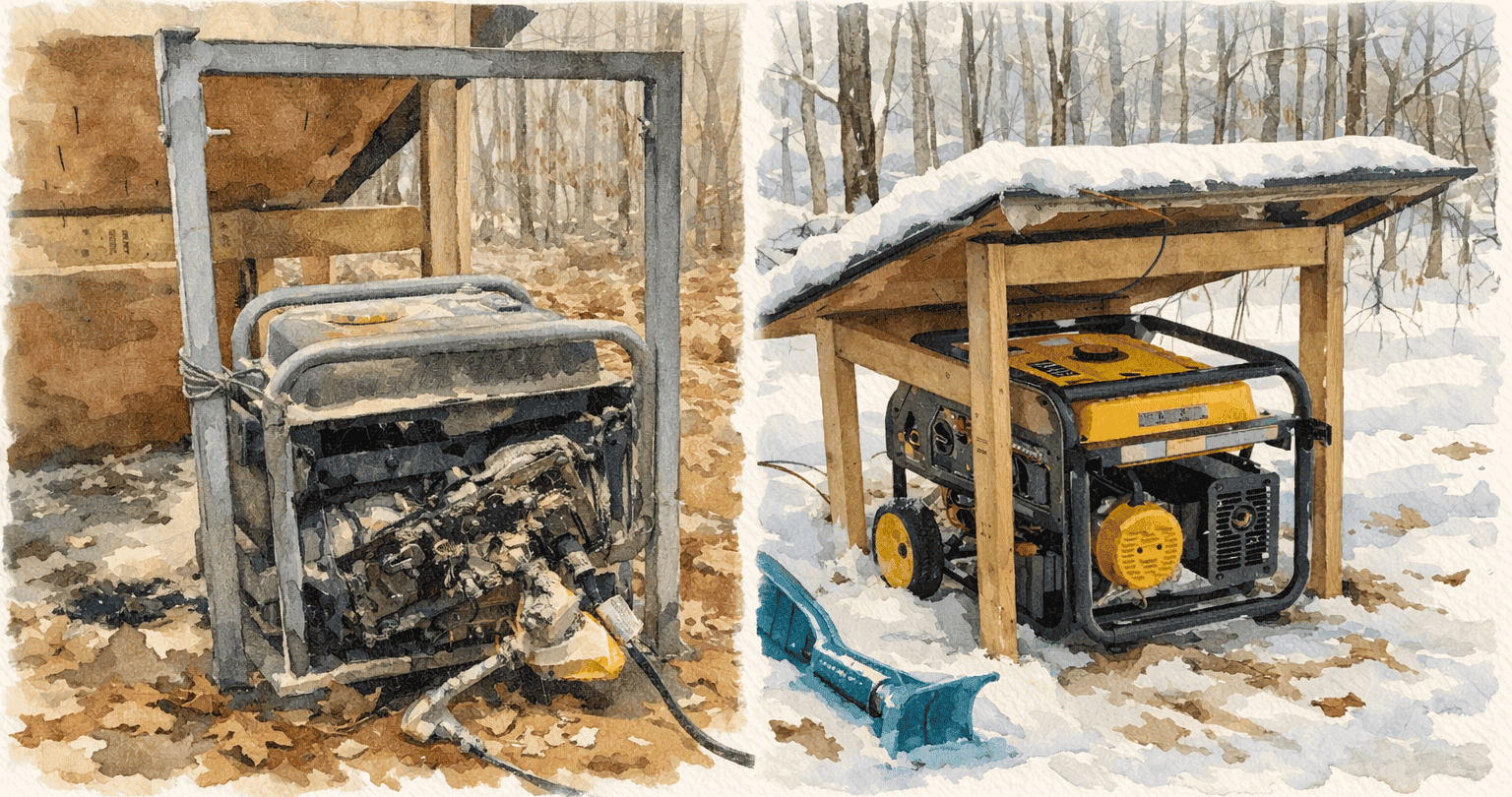
I climbed out to see what was going on. My first thought was that the generator had simply run out of gas. Outside, I found my brother, exhausted and stressed. The generator hadn’t run out of fuel. It had malfunctioned overnight and caught fire.
It was our only generator at the time, and it was a good one: an inverter model, the kind that ramps up and down with the load instead of running flat-out all the time, so it’s quieter and uses fuel more efficiently. Now it was gone. My brother had woken with a gut feeling that something was wrong, gone to check, and seen the orange glow. We keep a fire extinguisher on site for exactly this kind of thing. He grabbed it and put the fire out quickly. The adrenaline didn’t leave him enough to get back to sleep.
We filed a warranty claim on the generator and bought a replacement so we weren’t left without power. The new one was tri-fuel (propane, natural gas, or premium gasoline) and much larger. We liked the idea of propane as an option, but we learned the hard way that propane isn’t as efficient for generating electricity, and that a bigger conventional (non-inverter) generator often just burns more fuel all the time, whether you need the capacity or not. That unit lasted us about a year, maybe a year and a half, before we found a smaller, cheaper-to-run generator for day-to-day use. We kept the big one for heavy power tools and use the small one for everything else.
The fire could have been worse. We were lucky. It was a sharp reminder that generators aren’t just loud and expensive to run. They’re machinery that can fail, and when they do, the stakes are real. It’s one of the reasons we were so ready to move toward solar when the time came.