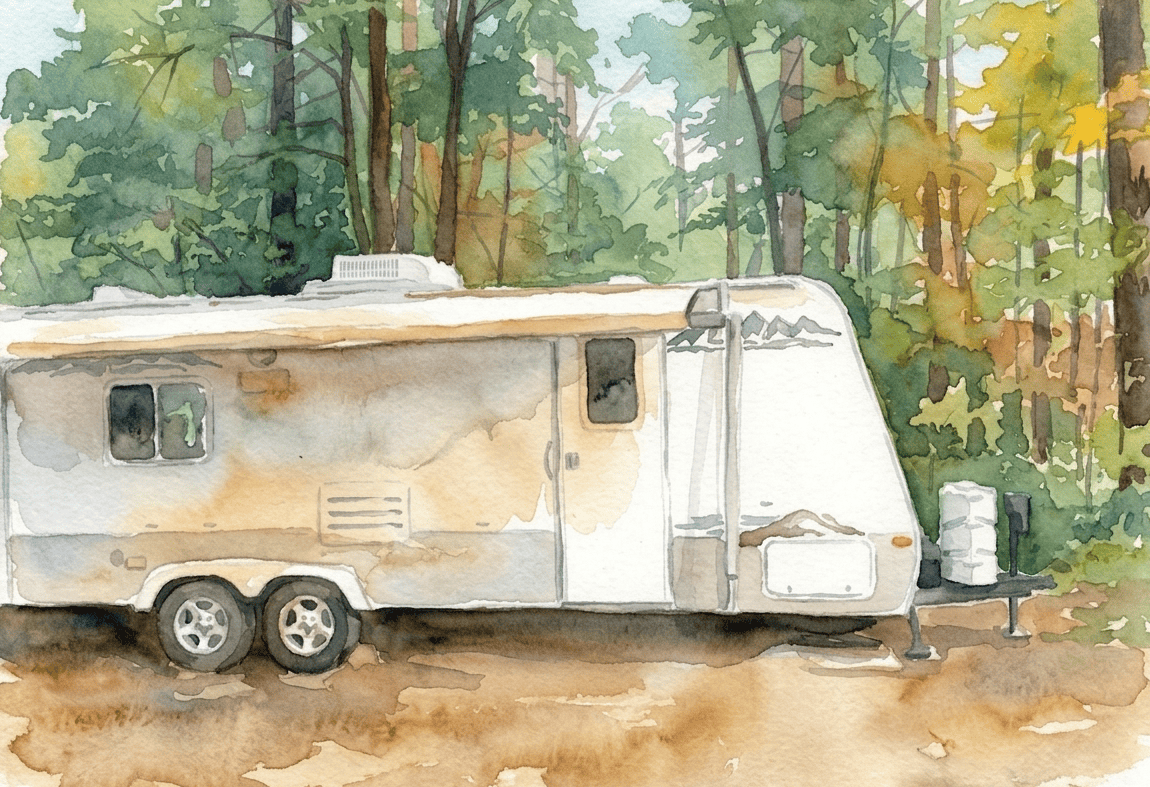
Once the septic was in, we were finally in a position to put a camper on the property for year-round recreational use.
The camper could have cost a lot. Or we could have found a dilapidated one that needed a full interior refinish. We did not know how long we would use it before the full build: a year, a few years, maybe more. So we chose something in the middle. It needed to be usable without major work, but used enough that we would not feel bad modifying it.
Unfortunately, this was toward the end of the pandemic, which meant prices had climbed fast. What used to be a few thousand dollars was now often over $10,000. After shopping around for a while, I found one under $10,000 that looked like it was in decent condition.
The interior and exterior were both in working order, and the bathroom felt like a luxury we had never experienced on the property.
Getting the camper into position was an entirely different story.
The Turn
The driveway into the campsite was manageable until we reached a hump in the road. It was a sudden rise caused by protruding bedrock, and it came right before a 90-degree bend.
We had spent the previous summer chiseling out rock and widening that area, but it was still a problem. If we tried to bring the camper in with a truck, we could not make the turn cleanly, and the bottom of the camper would scrape on the rock.
We ended up leaving the camper in the driveway and cutting a path through low brush so the truck could get back out.
After considering the options, we decided the Kubota BX23S tractor was probably the right machine for the job. It was much shorter than the truck and could turn in a tighter radius. Just as importantly, the three-point hitch on the back could move hydraulically, independent of the tractor itself.
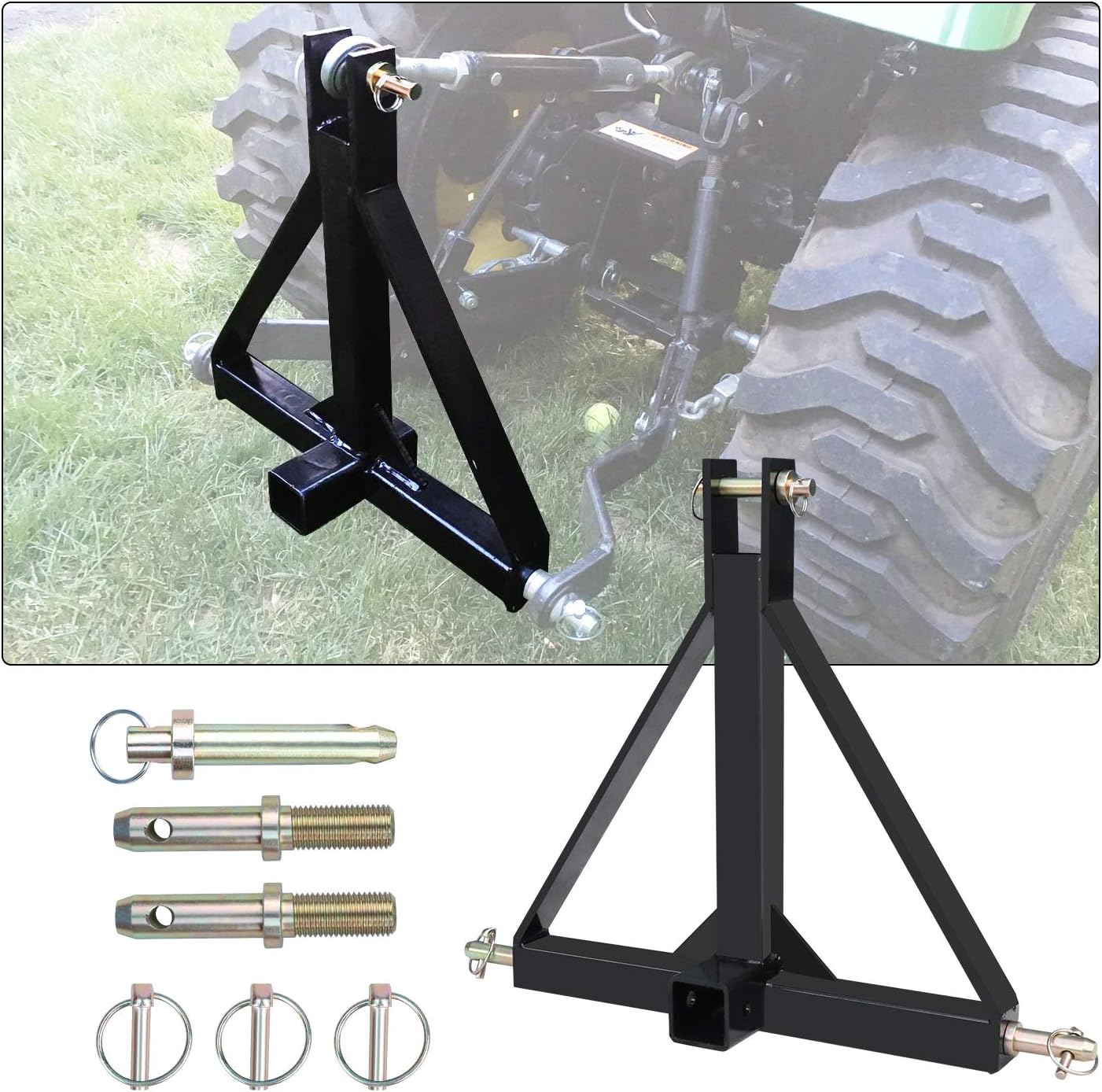
To connect the camper, we used a three-point hitch receiver adapter that gave the tractor a standard receiver. That let us move the camper slowly and precisely while raising or lowering the hitch enough to edge over the rock without scraping the bottom.
Getting It In
Even with the tractor, the turn was tight. As we came up through the property, the camper still needed more room than the road wanted to give us.
In the end, we had to cut down a tree to make the turn. That was fine for us, since we were already planning to open up that area, but it was still one more reminder that every “simple” step on the property tends to become its own project.
Once we were around the bend, the rest of the move was straightforward. We brought the camper into position, set it up, and slept in it properly for the first time.
It changed the property immediately. We were no longer packing for a weekend like every trip was a camping trip. We had a place to arrive, sleep, cook, use the bathroom, and leave things between visits. It was temporary, but it made the land much easier to use while we kept working toward the permanent build.
Comments